Why Automation Failed: The Human-in-the-Loop Thesis
The winning pattern preserves human judgment while eliminating busywork
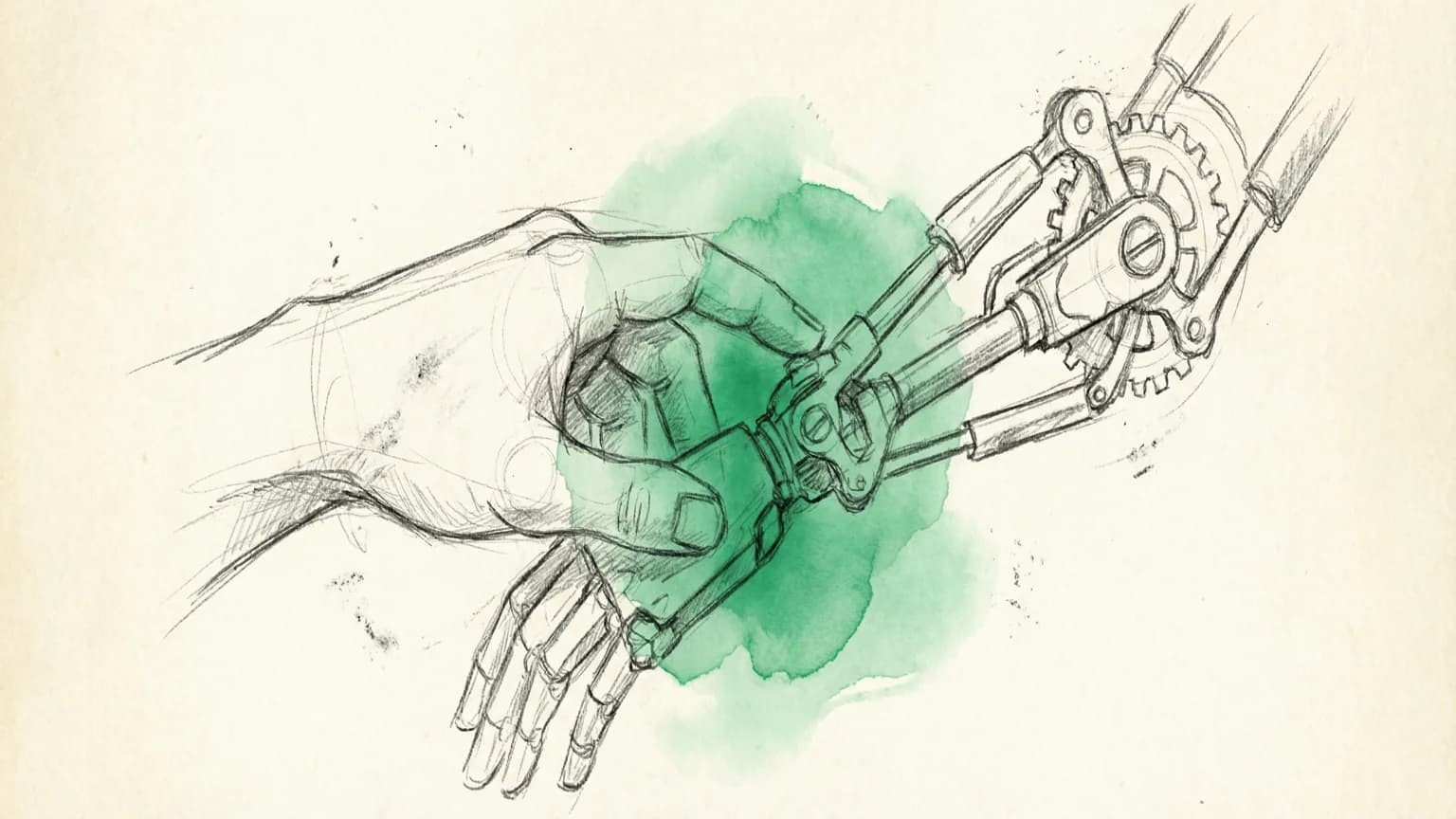
The industry bet on removing humans. The systems that actually work do the opposite.
I spent three months building a system to automate my job search. Scrapers. Ranking algorithms. Auto-generated cover letters. Resume tailoring. The works.
It was elegant. Hands-free. And it produced a 2% response rate.
The recruiters who did respond said things like: "Your materials felt generic." One was blunt: "This reads like AI wrote it." She wasn't wrong.
So I threw out most of the automation and rebuilt around a different principle: AI does the prep work, I make the decisions. Four quality gates, each requiring my explicit approval. More friction, less automation, more time per application.
Response rate: 40%.
That twenty-fold improvement taught me something I keep seeing confirmed elsewhere: the industry's bet on removing humans from workflows was wrong. Not wrong in the sense of "hasn't worked yet." Wrong in the sense of "structurally can't work for the problems that matter."
The Assumption
The pitch for AI automation goes like this: humans are slow, expensive, and inconsistent. AI is fast, cheap, and tireless. Therefore, replace the humans.
It sounds reasonable. And for certain narrow tasks, it works. Data entry. Spam filtering. Image labeling. Anything where the answer is clearly right or wrong, where context doesn't matter, where the cost of errors is low.
But the automation vendors didn't stop there. They went after email drafting, customer service, content creation, hiring decisions, medical triage. Workflows where context shapes everything, where errors compound, where stakes are high.
The assumption: if you add enough data and tune the prompts carefully, AI can replicate human judgment.
I believed this assumption. I built systems around it. They kept failing in ways I didn't anticipate.
Why It Fails
The failure modes cluster around three problems.
Context loss. My automated job search system couldn't tell the difference between a company that mentioned "Series A" in their job posting because they were excited about their trajectory versus one that mentioned it because they were warning candidates the role might disappear in six months. A human reads those signals instantly. The algorithm scored them identically.
More broadly: AI systems work from the text they're given. Humans work from the text plus everything they know about the world. That gap never closes.
I watched this play out with a friend who runs customer support. She implemented an AI responder that hit 85% resolution rate on paper. But the 15% of tickets it punted? Those were the tickets from their largest accounts, the ones phrased ambiguously because the sender assumed the support rep knew the account history. The AI would ask clarifying questions that a human would never ask, and customers started to feel unimportant. Three enterprise accounts churned within two months. The 85% resolution rate was worse than the 70% rate with human reps, once you weighted for revenue impact.
No accountability. When my auto-generated cover letters produced that 2% response rate, who was responsible? The system? The prompts? The training data? Me for configuring it? The diffusion of responsibility made it hard to fix.
Compare this to the rebuild: when a cover letter failed to get a response after I'd personally approved it through four quality gates, I knew exactly what had happened. I'd read the company research. I'd evaluated the fit score. I'd edited the draft. I'd signed off on the final version. If it didn't work, I had specific hypotheses about why, because I'd been present at every decision point.
This isn't just about debugging. It's about learning. Systems that remove humans remove the feedback loops that let humans get better. And humans getting better is often more valuable than systems getting faster.
Trust erosion. Here's something nobody talks about: users don't trust fully automated systems, even when they work.
My partner uses a financial advisor who has AI-generated portfolio suggestions. The suggestions are good. Empirically, they beat the advisor's manual picks. But she still wants the advisor to review them before implementing. Not because she thinks the AI is wrong. Because she needs someone accountable for the decision. Someone she can call. Someone who will answer for the outcome.
That desire for human accountability isn't irrational. It's a reasonable response to the reality that AI systems fail in unpredictable ways, and when they fail, there's no one to make it right.
The automation vendors keep trying to solve this with better explanations. "Here's why the AI made this decision." But explanations aren't accountability. Accountability requires someone who will fix it when things go wrong. And "the algorithm" can't fix anything.
The Alternative
The systems I've built that actually work share a pattern: AI handles preparation, humans make decisions.
This isn't "human in the loop" in the sense the industry uses that phrase, where "human in the loop" means "a human who rubber-stamps AI outputs." That's theater. The AI is still making the decisions; the human is just providing legal cover.
Real human-in-the-loop means the human is the decision-maker and the AI is the research assistant. The human isn't reviewing AI work. The human is doing the work, with AI-prepared materials.
The difference is where the cognitive load falls. In rubber-stamp mode, the human has to evaluate whether the AI's decision is correct, which requires reconstructing the context and reasoning that led to the decision. That's harder than making the decision yourself. In prep-mode, the human has context handed to them and makes the call, which is exactly the task humans are good at.
I've built three systems around this pattern in the past year. All of them outperformed their "more automated" predecessors.
Case Study: Job Search Copilot
The system that prompted this essay.
Version one: maximum automation. Scrape job boards, filter by keywords, score by fit algorithm, generate cover letters, prepare applications, queue for batch send. I spent two weeks building a Candidate Market Fit scoring algorithm that weighted role match, company tier, location, seniority, and posting freshness. The cover letter generator used my resume, the job description, and a template I'd refined over dozens of iterations. It was, on paper, everything the "AI-first job search" pitch promised.
Results: 2% response rate across 150 applications. Feedback from the few recruiters who responded: "generic," "feels mass-produced," "AI vibes."
I was annoyed at first. The materials weren't bad. The scoring algorithm correctly identified good-fit roles. The cover letters hit the key points. What was the problem?
The problem was that "not bad" isn't the bar. The bar is "makes someone want to schedule a call." And when you're competing with hundreds of applicants, "not bad" means your application lands in the same pile as everyone else running the same playbook.
Version two: human-as-architect. Same scraping. Same scoring. But then four quality gates:
- Writing review: I read every cover letter and approve the structure. Not skim. Read. If I can't articulate why this specific cover letter fits this specific company, it's not ready.
- Humanizer pass: The system flags AI-isms (em dashes, rule-of-three structures, certain phrases like "passionate about" and "excited to contribute"). I rewrite flagged sections in my own voice.
- Hiring manager grade: The cover letter gets scored from a hiring manager's perspective. The question isn't "is this good?" but "would this make me want to schedule an interview?" Anything below A+ goes back for revision.
- My approval: Nothing sends without me clicking a button that says "send this." Not a batch send. One at a time.
Results: 40% response rate across 35 applications.
The math: version one generated 3 responses from 150 applications. Version two generated 14 responses from 35 applications. Same time period. Same job market. Same resume.
The total time per application went from 2 minutes (mostly waiting for the automation) to 15 minutes (reviewing, editing, deciding). But the conversion rate went up twenty-fold. Net time per interview: 100 minutes in version one versus 37 minutes in version two.
The key insight wasn't that my edits were magical. Plenty of applications I approved were similar to what the automation produced. The key insight was that the quality gates forced me to engage with each application as a specific thing, not a member of a batch. That engagement showed up in the output. Hiring managers, consciously or not, could tell the difference between "someone who mass-applied to this role" and "someone who thought about whether this was the right fit."
Case Study: The Leaderboard
Last year I built a fitness leaderboard for a small running community. About forty people, mostly friends of friends, connected through a shared interest in trail running.
First version: fully automated. Synced Strava data every hour, calculated rankings by weekly mileage, posted updates to a Discord channel every Sunday. Zero manual intervention required. I was proud of it. Clean code, reliable syncing, nice formatting.
Nobody used it.
Week one: twelve people checked in. Week two: six. Week three: two, and one of them was me.
So I rebuilt it with gamification hooks. Badges for streaks. Achievements for personal records. Weekly challenges with leaderboards. I read all the product psychology literature. Variable rewards. Progress bars. Social comparison mechanics. I implemented everything.
The badges didn't work either. Weekly active users climbed to eight, then stalled.
I was about to give up when I tried something different. Instead of posting automated stats, I started writing a manual "highlight reel" every Sunday. I'd spend maybe thirty minutes scanning the data and picking out interesting stories: someone's comeback run after a knee injury. A new member's first double-digit week. A personal record on a notoriously hard local route. Just a paragraph or two, with the numbers to back it up.
Engagement went through the roof. Weekly active users hit thirty. People started replying to the highlight posts. They shared their own stories. The community became a community, not a dashboard.
Here's what I think happened: the automated leaderboard presented data. The highlight reel presented recognition. And recognition requires judgment about what matters. The algorithm couldn't tell that someone's 15-mile week after months of injury was more impressive than someone else's 40-mile week during a typical training block. I could.
The most automated version was the least engaging. The version that required the most human involvement was the most engaging. I didn't expect that. I'd assumed automation would free me up to focus on "higher value" work. Turns out the recognition work was the highest-value work.
The leaderboard now is a hybrid. Automated data sync, automated ranking updates, automated badge notifications. But the weekly narrative, the part that makes people actually check the app, is handwritten based on data the system surfaces. AI does the prep. Human makes the editorial call.
Case Study: Claude Code Memory Pipeline
The most recent, and the one that made the pattern click for me.
I use Claude Code (Anthropic's CLI) heavily. Hundreds of hours over the past six months. After a while, I noticed I was repeating corrections: "Don't use that phrase." "Remember this project structure." "Here's how I like commits formatted." "Stop adding emojis to documentation."
The obvious solution: add everything to a configuration file. List your preferences, and the AI follows them.
But configuration files are static. My preferences evolve. Sometimes I don't know I have a preference until I see the AI violate it. And writing down every preference up front is exhausting. I wanted the system to learn from correction, not from configuration.
The even more obvious solution: let the AI learn automatically. Track corrections, identify patterns, update its own behavior.
This is where most people would stop and build a self-improving system. I almost did.
But I'd seen enough failure modes by this point to be suspicious. What happens when the AI identifies a pattern that's real but shouldn't become a rule? What happens when it generalizes incorrectly? What happens when my preferences in one context don't apply in another?
So I built a memory pipeline with human approval at the key transition point:
- Diary: After each session, the system generates a diary entry summarizing what happened. Decisions made, corrections given, problems encountered. This is automatic. No effort required from me.
- Reflect: Weekly, the system analyzes diaries to find patterns. "User corrects AI on X multiple times" becomes a candidate rule. Also automatic.
- Curate: I review candidate rules and decide which ones become active. This is the human-in-the-loop moment. The system proposes, I dispose. Takes maybe ten minutes a week.
- Rules: Approved rules get added to the configuration. The AI follows them going forward.
After three months: 131 diary entries, 28 patterns identified, 18 active rules.
The ratio matters: only 64% of identified patterns became rules. More than a third were patterns I looked at and said "that's true in some contexts but I don't want it as a blanket rule."
Example: the system identified "user prefers short variable names" as a pattern. True. I do correct the AI when it uses descriptiveButVeryLongVariableName. But I don't want "short variable names" as a rule, because sometimes descriptive names matter more than brevity. Context determines which. The AI couldn't make that distinction. I could.
Another example: "user corrects AI when it uses em dashes." True for professional writing. Not true for personal notes, where I actually like em dashes. A blanket rule would have been wrong.
If I'd built a fully automated learning system, those incomplete generalizations would have become entrenched. The AI would have started making new mistakes based on old corrections. Instead, the patterns become proposals that I evaluate, and only the ones that survive evaluation become rules.
Automation that captures without acting is more valuable than automation that captures and acts. The former adds signal. The latter adds signal and noise, and noise compounds.
The Framework
Here's how I think about this now.
There are two dimensions that matter when designing AI-augmented workflows:
- Discipline required from the user: How much effort does the user need to exert to get value?
- Autonomy granted to the AI: How much does the AI do without asking?
The industry optimized for "autonomy up, discipline down." Fully automated systems that work even when users ignore them. Set it and forget it.
That's the wrong quadrant.
The right quadrant is "autonomy down, discipline down." Systems where the AI does significant prep work (so users don't need discipline to get value) but users still make decisions (so the AI doesn't need to be autonomous).
Or, put differently: automation requiring zero discipline beats automation requiring zero humans.
Most people don't have discipline. They won't check the AI's work. They won't configure the system properly. They won't maintain the feedback loops. If your system requires user discipline to work, it will fail for most users.
But most valuable decisions require human judgment. Context, accountability, and trust all break when you remove humans. If your system requires no humans, it will fail at valuable tasks.
The winning systems thread this needle: AI lowers the bar for engagement (no discipline needed to get started) while humans retain the high-value decisions (judgment stays in the loop).
My job search copilot: I don't need discipline to scrape jobs or research companies. That happens automatically. But I do need to approve every application, and that approval is the whole point.
The leaderboard: Nobody needs discipline to have their data tracked. That's automatic. But the weekly narrative that makes people care comes from a human editor.
The memory pipeline: I don't need discipline to generate diaries or identify patterns. That happens in the background. But I do need to decide which patterns become rules.
The Meta-Insight
There's a temptation to frame this as "AI isn't ready yet." Give it more time, more data, better reasoning. Eventually we'll get to full automation.
I'm not sure that's true. Not because AI won't improve, but because the problems with full automation aren't about capability. They're about structure.
Context, accountability, and trust aren't technical limitations. They're features of how humans make decisions and how we coordinate with each other. They don't go away when AI gets smarter. If anything, they become more important as AI gets more capable, because the gap between "what AI can do" and "what AI should be trusted to do" widens.
The friction of human-in-the-loop isn't something to engineer away. It's load-bearing. Remove it and the structure collapses.
There's a related insight about friction more broadly. Product designers are trained to remove friction. Every step between intention and action is a chance for users to drop off. Streamline. Simplify. Reduce clicks.
But some friction is necessary. The friction of reading a cover letter before sending it forces me to engage with whether it's actually good. The friction of approving a rule before it goes live forces me to evaluate whether the pattern is real. The friction of writing a weekly highlight reel forces me to understand what's happening in the community.
Friction that feels like effort is sometimes exactly what makes a system work.
What This Means
For builders: Stop optimizing for "hands-free." Optimize for "hands-on-the-right-things." The question isn't "how much can we automate?" It's "which decisions need human judgment, and how can we make sure humans have the context to exercise it?"
The practical test: run your workflow on autopilot for a week, then run it with humans at every decision point. If the second version produces better results, you've found where judgment matters. Now build a system that makes that judgment easier to exercise, not one that tries to automate it away.
For buyers: Be skeptical of any AI system that promises to work while you ignore it. The good ones require your attention at key moments. That's not a bug; it's the feature that makes them trustworthy.
The warning sign: if the vendor's pitch is "set it and forget it," ask them what happens when it's wrong. If they don't have a good answer, they haven't thought through the accountability problem. And if they haven't thought through accountability, their system will fail the first time it matters.
For the industry: The pitch needs to change. Not "replace your team with AI" but "give your team superpowers." Not "set it and forget it" but "set it up, stay involved, get better results."
The latter is a harder sell. It admits that humans are still necessary. It implies ongoing effort. But it's the pitch that actually delivers, because it's honest about where AI adds value and where it doesn't.
The irony is that this constraint might be liberating. If you stop promising full automation, you can stop trying to solve problems that don't have solutions. Context loss isn't a bug to fix. Accountability isn't a feature to add. They're structural realities of how humans and machines differ. Accept them, and you can build systems that work with those realities instead of against them.
I'm still building systems. Still looking for the right balance. Still occasionally trying things that are more automated than they should be, because the temptation never quite goes away.
But I've stopped chasing full automation as a goal. The systems that work keep humans in the loop, not as rubber stamps, but as architects. Not as bottlenecks, but as the decision-makers who give the work meaning.
AI does the prep. Humans make the calls.
It's slower. It's messier. It works.